


What Actually Happens to Your Skin During a Chemical Peel (And Why That’s a Good Thing)
If the words “chemical peel” make you picture red, raw, peeling skin that keeps you hidden indoors for a week — you’re not alone. It’s one of the most misunderstood treatments in skincare. The reality is much gentler, much more interesting, and frankly, pretty exciting once you understand what’s actually going on beneath the surface.
First — what is a chemical peel, really?
A chemical peel uses a carefully formulated solution applied to the skin to accelerate your skin’s natural shedding process. Normally, your skin renews itself every 28–40 days (longer as we age). A peel essentially speeds that up, encouraging the outermost layers of skin to shed more quickly so fresher, healthier skin can come to the surface sooner.
The result? Smoother texture, brighter tone, reduced fine lines, fewer dark spots, and a general “reset” that’s hard to achieve with skincare products alone.
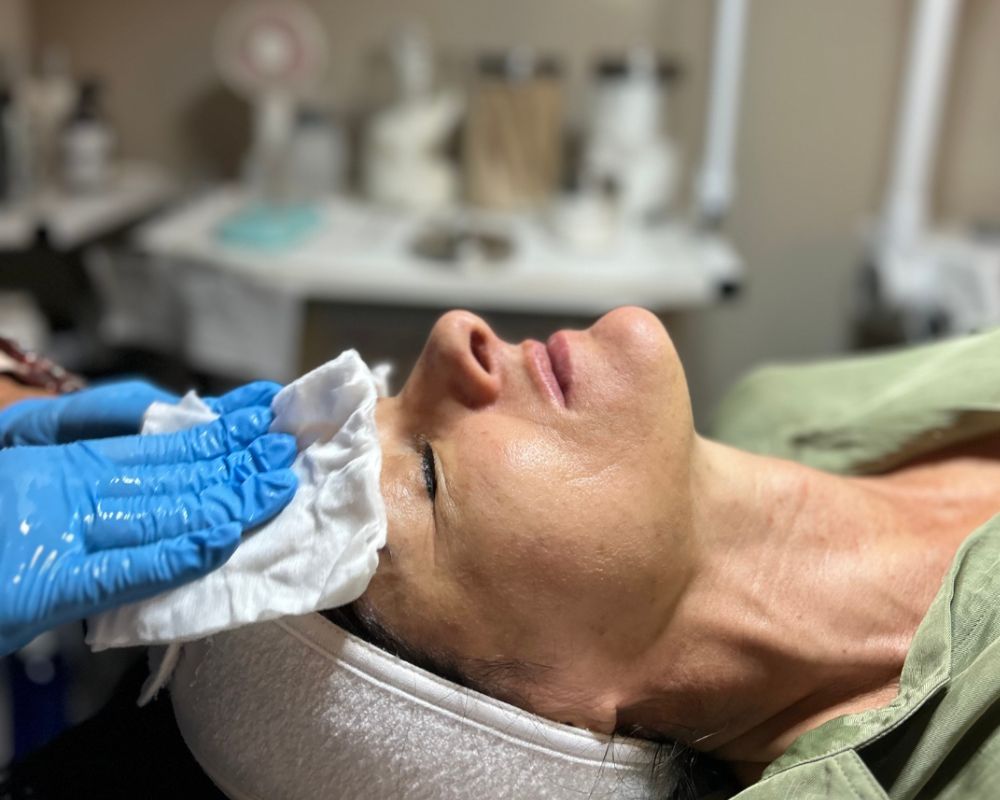
What actually happens during the treatment?
Here’s a simple step-by-step of what you can expect when you come in for a chemical peel at The Skin Clinic Scottsdale:
- Cleanse. Your skin is thoroughly cleaned to remove any makeup, oil, or product — so the peel can work evenly across the skin.
- The solution is applied. Your provider applies the peel solution using a brush or cotton pad. Depending on the peel, you may feel a light tingling, warmth, or mild stinging sensation — this is completely normal and usually brief.
- It gets to work. The solution begins loosening the bonds between dead and damaged skin cells. Think of it as gently telling the old, tired surface layer that it’s time to go.
- Neutralization or removal. Depending on the type of peel, the solution is either neutralized with water or naturally self-neutralizes after a set time.
- Soothing finish. Your provider will apply a calming, hydrating treatment to support your skin’s recovery and send you home with aftercare guidance.
The whole process typically takes around 30–60 minutes depending on which peel you’re having.
So what happens after you leave?
This is where the “peel” part actually happens — and it’s often much subtler than people expect. With lighter peels, you may experience nothing more than slight dryness or flaking over a few days, similar to mild sun exposure. You won’t necessarily look like you’re peeling in any obvious way.
With medium-depth peels, there’s more visible shedding — but this is your skin doing exactly what it’s supposed to do. Underneath that shedding surface, fresh new skin cells are rising to the top.
The peeling is a sign it’s working — not a sign something has gone wrong.
The peels we offer at The Skin Clinic
We offer a range of SkinMedica peels to suit different skin concerns and comfort levels, all performed by our experienced team:
- Illuminize Peel — The gentlest entry point. Designed for mild skin imperfections, it delivers vibrant, radiant-looking skin with minimal downtime. Perfect if you’re curious about peels but want to start slow. We also offer it paired with Dermaplaning for an extra glow boost.
- Vitalize Peel — Steps things up to address fine lines, uneven tone, and mild to moderate imperfections including acne scarring and pigmentary changes.
- Rejuvenize Peel — Our most advanced option, delivering noticeable improvement after just one treatment and compelling results after a course of three to six peels. Best for moderate to severe skin concerns.
Not sure which one is right for you? That’s exactly what a consultation is for.
Who is a good candidate for a chemical peel?
Chemical peels work well for a wide range of skin concerns, including fine lines and wrinkles, uneven skin tone, sun damage, dullness, acne scarring, and rough or congested texture. They’re suitable for most skin types, though your provider will always assess your skin before recommending the right peel and depth for you.
If you’ve been using a Vitamin A product like SkinMedica Retinol, you’ll want to pause it for a few days before your peel — your provider will walk you through exactly how to prepare.
A few golden rules for after your peel
- Keep skin hydrated — a simple, gentle moisturiser is your best friend.
- Wear SPF every single day. Freshly revealed skin is more sensitive to sun exposure.
- Don’t pick or force the peeling process. Let it happen naturally.
- Avoid active ingredients like retinol, AHAs, and BHAs until your skin has fully settled.
- Stay out of intense heat — saunas, hot yoga, and direct sun — for a few days.
Ready to try one? We’d love to help.
Whether you’re completely new to peels or ready to take your results to the next level, the team at The Skin Clinic Scottsdale is here to guide you. We offer complimentary consultations so you can ask every question you have before committing to anything.
Call us: (480) 513-2888
Book online: theskinclinicaz.com
Frequently Asked Questions
Will a chemical peel make my skin peel dramatically?
Not necessarily — and this surprises a lot of people. With lighter peels like the Illuminize, you may only experience mild dryness or subtle flaking, similar to what you’d notice after a day in the sun. More visible shedding comes with medium-depth peels like the Rejuvenize, but even then it’s usually manageable and short-lived. Your provider will always set realistic expectations beforehand.
How much downtime should I expect?
It depends on the peel. The Illuminize Peel has minimal to no downtime — most clients go right back to their day. The Vitalize Peel may involve a few days of mild peeling. The Rejuvenize Peel typically involves the most visible recovery, around 5–7 days of shedding. Our team will help you choose a peel that fits your schedule and lifestyle.
How often can I get a chemical peel?
For lighter peels, every 4–6 weeks is generally suitable. Medium-depth peels are typically spaced further apart — your provider will build a treatment schedule based on your skin’s response and your goals. Many clients see their best results after a series of 3–6 treatments.
Can I wear makeup after a chemical peel?
For lighter peels, most clients can return to makeup within 24 hours. After a deeper peel, it’s best to let the skin breathe and heal before applying anything — usually around 5–7 days. Mineral-based products are gentler on recovering skin when you do return to makeup.
Is a chemical peel safe for skin that’s already using retinol?
Yes, but you’ll need to pause your retinol — including SkinMedica Retinol Complex — for a few days before your appointment. Using retinol too close to a peel can increase sensitivity and affect how the skin responds. Don’t worry — your provider will give you a full prep checklist at your consultation so everything is timed perfectly.
